17.6%Post breakout--Typical win54.3%Won
UALLong
$35B capVol 20th percentileRSI 41Transport & Logistics
A rising wedge has two upward-sloping boundaries that draw closer together. Learn what the narrowing range shows, how a downside trade is defined and what its historical record measures.
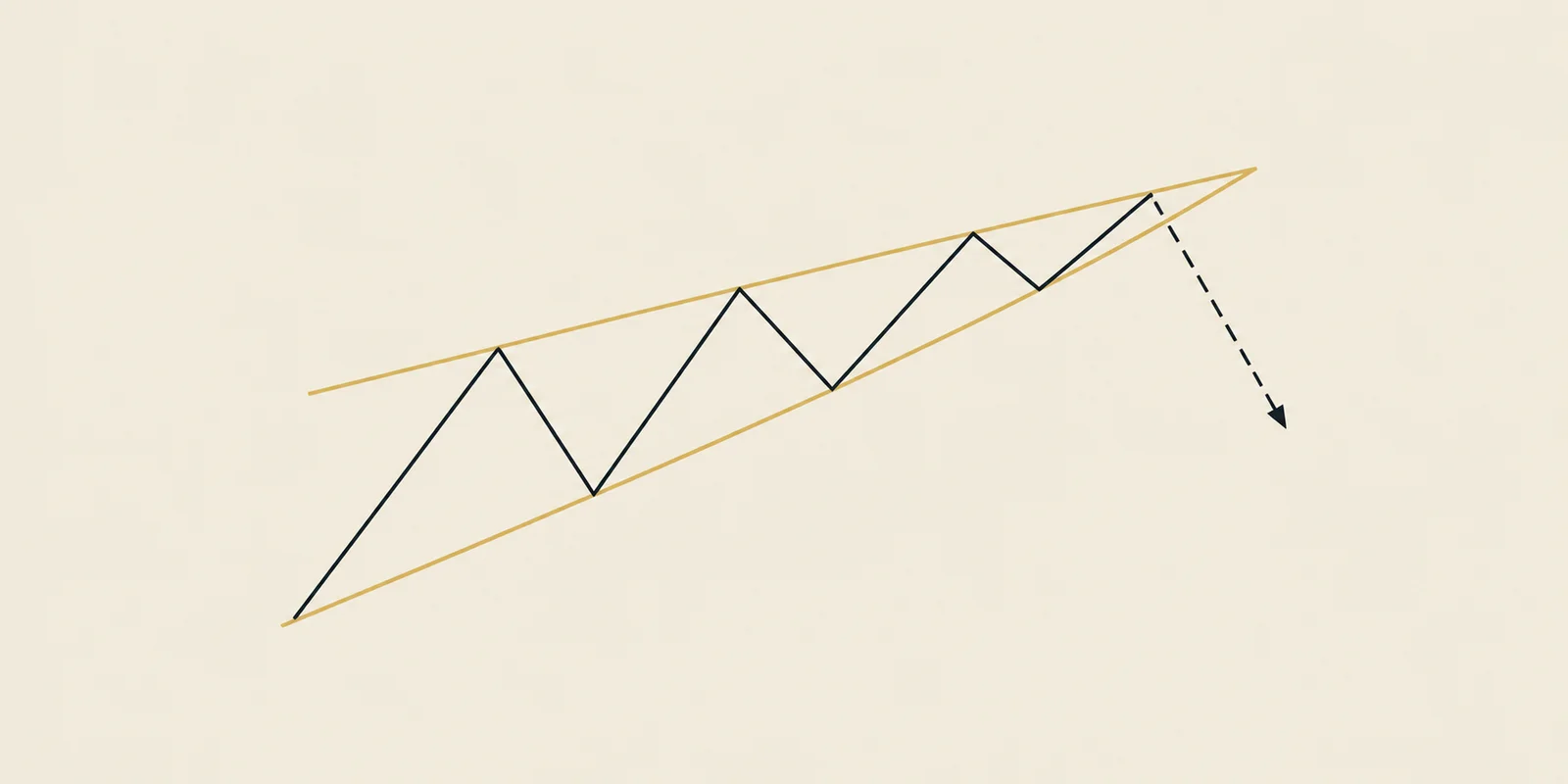
A rising wedge forms when both highs and lows rise while the range between them narrows. The line under the lows rises more steeply than the line across the highs, bringing the boundaries closer together.
Imagine a stock still making new highs while its daily swings narrow from $6 to $3. These illustrative ranges show how a climb can fit inside a progressively smaller space. Traders watching for a decline wait for price to leave through the lower boundary.
The shape can occur during a rally or a recovery within a longer decline. The trend line basics guide explains how to connect the turning points.
Use these features to check the shape:
A rising channel has roughly parallel boundaries. Check that the gap between the lines decreases before treating the shape as a wedge.
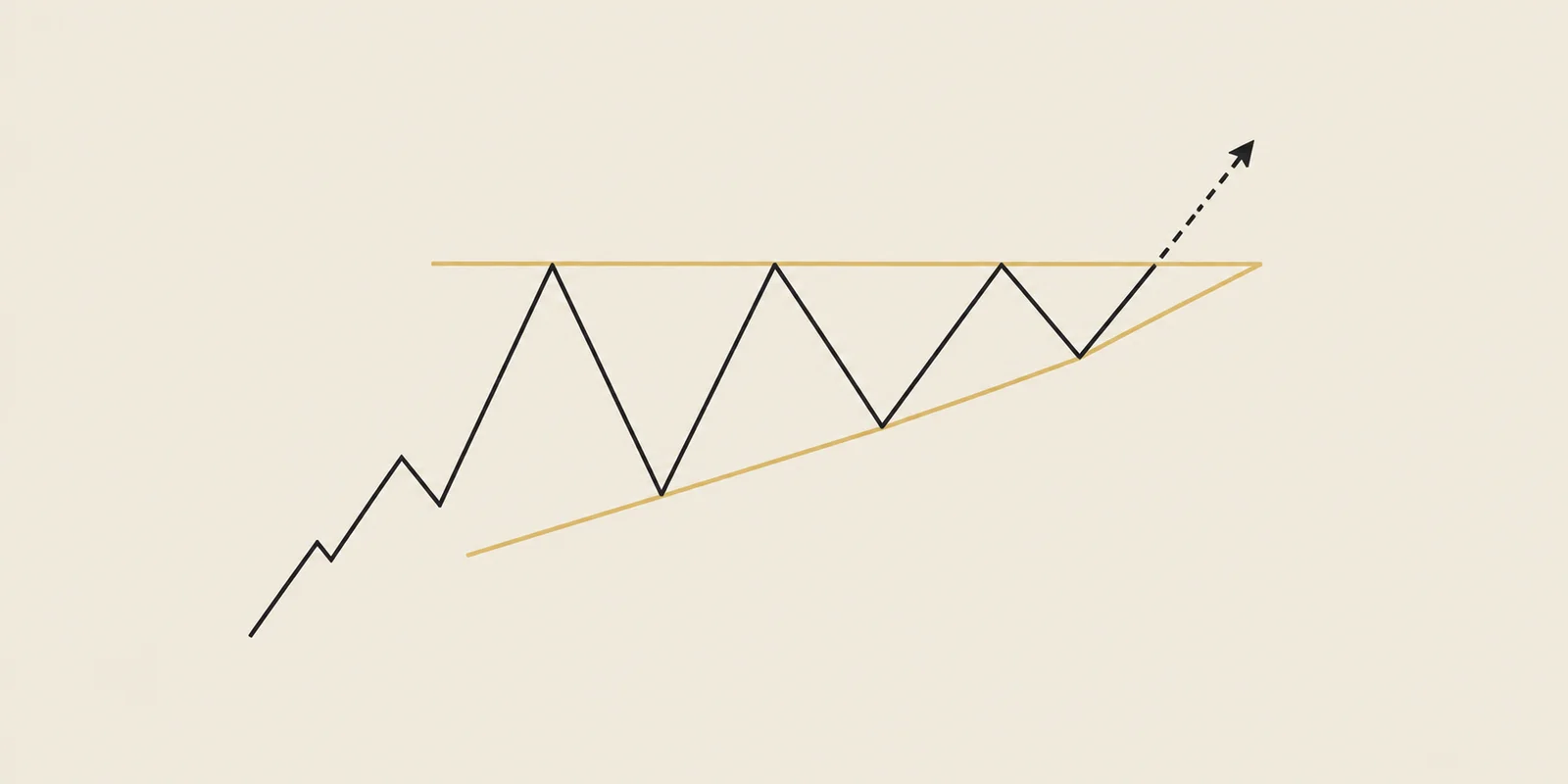
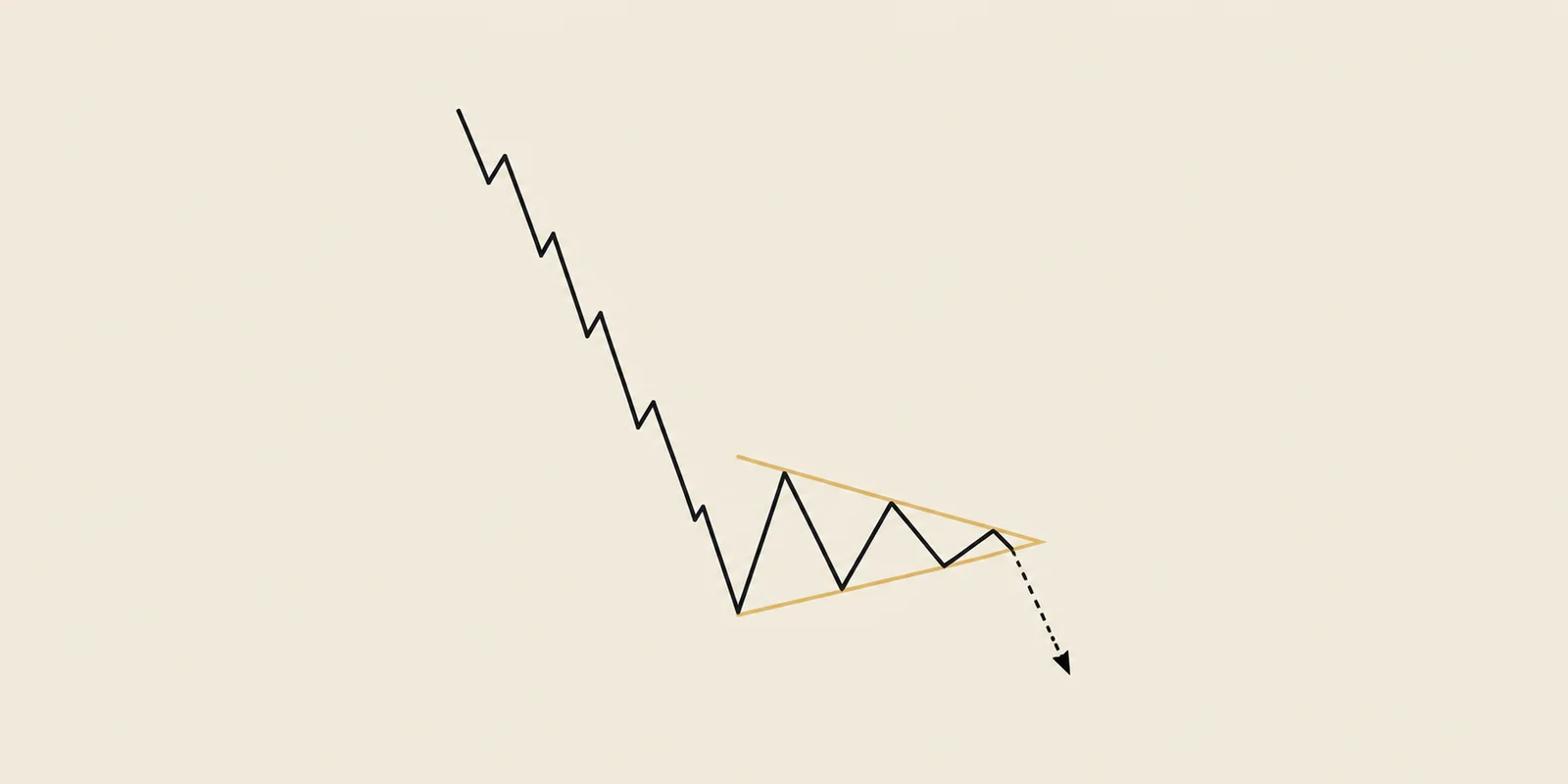
Compare the boundaries and the move preceding the consolidation to distinguish these related patterns.
Illustrative shapes. Compare the move before the pause and the direction of the two boundaries.
Traders watch the lower boundary for a possible downward break. Until the trigger is reached, price may continue rising within the wedge or move above it.
An existing shareholder can use that boundary when reviewing an exit plan. A new short position is a separate decision with its own entry and risk; the next section explains the simulated short rule.
A short trade sells borrowed shares and later buys them back. It gains from a decline and loses from a rise; borrow availability and costs also affect whether a real trade is possible.
The following steps describe TradingPal’s historical simulation. Choose each step on the diagram to see where the price level sits. The risk/reward guide explains how the distance from entry to the safety exit becomes the planned risk, or 1R.
The simulation places its entry trigger below the lower boundary. The pattern must have been established on an earlier daily candle. The first eligible candle to reach the trigger can fill the order. If price gaps past it overnight, the simulation uses the worse opening price.
The planned invalidation level sits above the last bounce before the breakdown. The test closes the trade at the close of a later daily candle beyond that level. Price can overshoot it or gap past it, so the actual loss can exceed the planned 1R.
Measure the pattern’s height at its widest point and project that distance from the entry trigger in the direction of the trade. This is the measured-move target. The bearish rule closes at the projected downside target.
The table summarizes simulated trades using the entry and exit rules above. Check the direction, sample size and measurement period before comparing rows. These results update when a new historical run is published.
Read win rate together with the size of the wins and losses. A strategy can win half its trades and still gain or lose overall. Average R and profit factor help explain which happened; the track-record metrics guide covers the calculation.
The published pattern group includes shapes that passed later confirmation checks. That can affect which historical trades enter the sample, even when the simulated fill uses prices available at the time. The backtesting methodology explains this limitation and the portfolio assumptions.
Historical results of the simulated strategy described above (2006-10-13 – 2026-09-08), refreshed nightly — not a prediction. How we test →
The examples below are selected completed trades from the historical simulation. Compare the entry and exit in each, including the losing trades. Opening a symbol takes you to its current chart.
Selected for learning, with a mix of wins and losses where available. Closed in the 90 days ending Sep 11, 2026. This selection is not a win-rate sample.
Our screener re-draws these lines on 2,600+ symbols every night and flags each chart that fits the checklist above. The current matches appear below.
9 fresh rising wedges formed in the last 45 days across our growing universe of 2,600+ scanned symbols (18 charts tracked for this pattern in total). Scan updated Sep 11, 2026.
9 structures found. See example
The day's #1 ranked setup, in your inbox.
Every morning we hand you the highest-ranked breakout structure found in our scan across 2,600+ tickers — Free.
See the full offeringTraders commonly watch it for a downward break. The short rule waits for its trigger below the lower boundary, and an upward move can invalidate the plan.
It describes a rising range that is getting narrower. A break below the lower boundary is the event watched by the bearish rule.
Price must reach the trigger below the lower boundary after the pattern could be established on an earlier daily candle.
Project the wedge’s widest height downward from the entry trigger. The tested bearish policy exits at that target unless its safety exit ends the trade first.
You can use its boundaries to review the risk of shares you own. A short position involves borrowing and selling shares, then buying them back, and loses money when the price rises.
A falling wedge has two downward-sloping boundaries that draw closer together.
An ascending triangle combines repeated highs near one price with rising lows.
A bearish pennant is a narrowing pause after a sharp decline.
Educational content, not investment advice. Backtest statistics are historical results of a simulated strategy, refreshed nightly — they describe the past, not the next trade.